Urgent care or emergency?
At CrabCare we provide urgent medical care at home: situations that need a doctor soon, but where life isn't in immediate danger. That saves you unnecessary trips, lines and catching something in waiting rooms.
If a life is at risk (not breathing, not responding, crushing chest pain, stroke, a seizure that won't stop, heavy bleeding, serious trauma), call 911. That's not a case for a home doctor.
Medical content reviewed by Dr. Jefferson Astudillo Peña, general physician (SENESCYT registration 1008-2023-2705888). Last reviewed: September 2026.
Emergency
- Is a life in danger?
- Yes, right now.
- How much time do I have?
- Minutes. Every minute counts.
- What should I do?
- Call 911.
- Manchester triage
- Red: immediate careOrange: very urgent, within 10 min
Urgent care
- Is a life in danger?
- Not immediately.
- How much time do I have?
- Hours. A doctor is needed soon.
- What should I do?
- Message us: we'll assess you at home.
- Manchester triage
- Yellow: urgent, within 60 minGreen: standard, within 120 min
Blue (non-urgent, within 240 min): a regular appointment can be booked. The minutes are the maximum wait to be seen in an emergency room under the Manchester scale.
Rule of thumb: If the person isn't breathing well, doesn't respond, turns blue, has crushing chest pain, is having a seizure or is bleeding heavily → 911. Most other cases can be assessed at home.
Not sure? We'll guide you at no cost
Message your city on WhatsApp and we'll help you tell whether it's urgent care we can treat at home or an emergency for 911. If you see any emergency sign, don't wait for our reply: call 911.
Emergencies: call 911
These situations need resuscitation, airway management, defibrillation, surgery or intensive care. A doctor at home can't handle them safely: they don't carry a defibrillator (AED) or resuscitation equipment.
- Cardiac arrest, or the person doesn't respond and isn't breathing
- Drowning or choking that doesn't resolve
- Severe difficulty breathing: can't speak, blue lips or nails, loud wheezing, chest caving in
- Crushing chest pain, with cold sweat, nausea or pain spreading to the arm, neck or jaw (suspected heart attack)
- Suspected stroke: facial droop, arm weakness, slurred speech, sudden confusion, loss of vision or balance
- A seizure that won't stop, or a first seizure with loss of consciousness
- Loss of consciousness that doesn't recover
- Heavy bleeding that won't stop (deep wound, heavy vaginal bleeding, vomit or stool with a lot of blood)
- Serious trauma: traffic accident, fall from a height, hard blow to the head with vomiting or drowsiness, exposed bone
- Extensive burns, burns on the face, hands or genitals, or electrical or chemical burns
- Severe poisoning or overdose (with drowsiness, seizures or difficulty breathing)
- Severe allergic reaction (anaphylaxis): swelling of the face or tongue, wheezing, dizziness, widespread hives
- Pregnancy with heavy bleeding, severe pain, seizures, or the mother stops feeling the baby move
- A sudden, very severe headache, unlike their usual headaches, especially with vomiting, confusion, a stiff neck or weakness
- Low blood sugar (hypoglycemia) with confusion, if they can't swallow or don't respond
- A suicide attempt, or someone harming themselves right now
- A child or adult who stops breathing, has a fever with a stiff neck and won't wake up, or suddenly seems “switched off”
The gray zone
Some conditions start as urgent care and turn into an emergency. If any of these signs appear, call 911; if the doctor is already there, the visit stops and 911 is called:
- Chest pain or headache gets worse or becomes “the worst of their life”
- Fever comes with a stiff neck, skin spots, or the child won't wake up
- Asthma doesn't ease with the inhaler and they can no longer speak
- The abdomen becomes rigid, vomiting won't stop, or stool is black or bloody
- They become drowsy, confused or stop urinating
- An older adult falls and then can't remember, vomits or can't walk
Urgent care: can be assessed at home
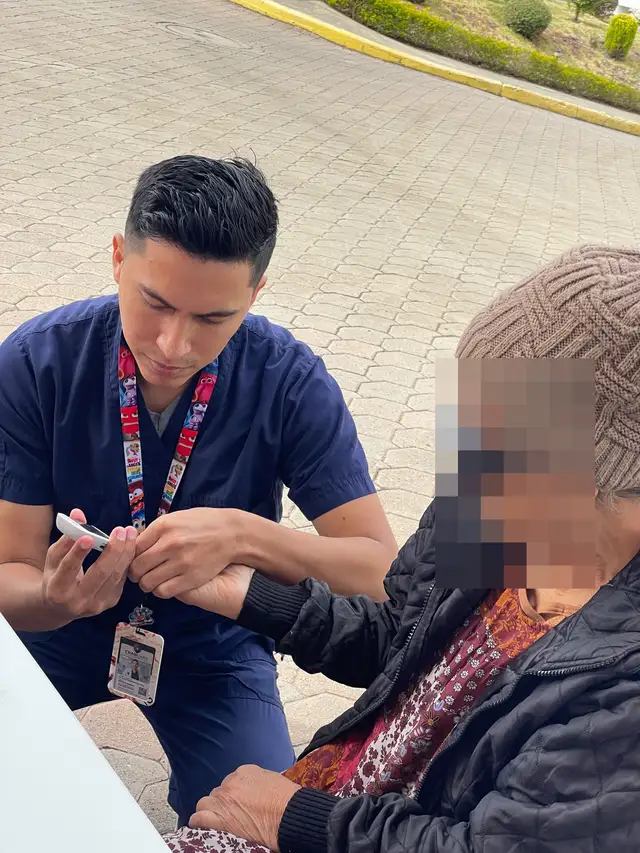
Life isn't in immediate danger. The doctor assesses, treats what can be treated at home (treatment, hydration, nebulization, wound care, lab tests, IV fluids when appropriate) and refers to hospital only if the condition requires it.
Respiratory and fever
- Colds, flu, cough, sore throat, ear infections
- Asthma or COPD with mild or moderate wheezing, still able to speak in sentences
- Tolerable fever (adult or child awake, hydrated, no stiff neck)
- Suspected respiratory or urinary infection without instability
Digestive
- Gastroenteritis (vomiting or diarrhea) without severe dehydration
- Stomach pain or biliary or kidney colic, without a rigid abdomen or uncontrollable vomiting
- Constipation, gastritis, reflux
Heart and blood pressure (stable)
- High blood pressure without chest pain, shortness of breath or confusion
- Mild palpitations in a stable patient
- Hypertension, diabetes or heart condition check-ups at home
Pain, minor injuries and skin
- Muscle spasms, low back pain, neck pain, joint pain
- Sprains, bumps or falls without obvious deformity or loss of consciousness
- A wound that needs cleaning or stitches, with bleeding under control
- Small, superficial burns
- Cellulitis, small abscesses, herpes, mild hives without breathing problems
- Migraine attacks or usual headaches (no stiff neck or neurological deficit)
Other common home visits
- Urinary tract infection, cystitis
- Anxiety or panic attacks (without chest pain typical of a heart attack)
- Mild diabetes decompensation or low blood sugar, if they can swallow: while we're on our way we guide you to give sugar and food by mouth
- Post-surgery or wound check-ups
- An older adult who feels unwell, low or “not their usual self”, but responds and breathes well
- Lab samples, ECG, ambulatory blood pressure monitoring or IV hydration when indicated
- Certificates, written instructions and chronic disease follow-up
What the doctor brings to your home
- Vital signs equipment: blood pressure monitor, pulse oximeter, thermometer and glucometer
- IV supplies
- Portable oxygen (small 1 m³ cylinder)
- Nebulizer equipment
What the doctor doesn't bring
- A defibrillator (AED) or resuscitation equipment
- Controlled substances
If a hospital visit is needed
The doctor will tell you and explain why. The family arranges the transfer: we don't have our own ambulance or an agreement with any, so it depends on ambulance availability or 911. We'll share the contact numbers we have so it happens as quickly as possible.
Our team can
- Assess and treat at home
- Take lab samples and run tests
- Start IV hydration or treatment when indicated
- Tell you if a hospital visit is needed and guide the family on the transfer
Not sure? We'll guide you at no cost
Message your city on WhatsApp and we'll help you tell whether it's urgent care we can treat at home or an emergency for 911. If you see any emergency sign, don't wait for our reply: call 911.
This guide is for general information. The final decision is made by the health professional after assessing the patient. When in doubt, call 911.